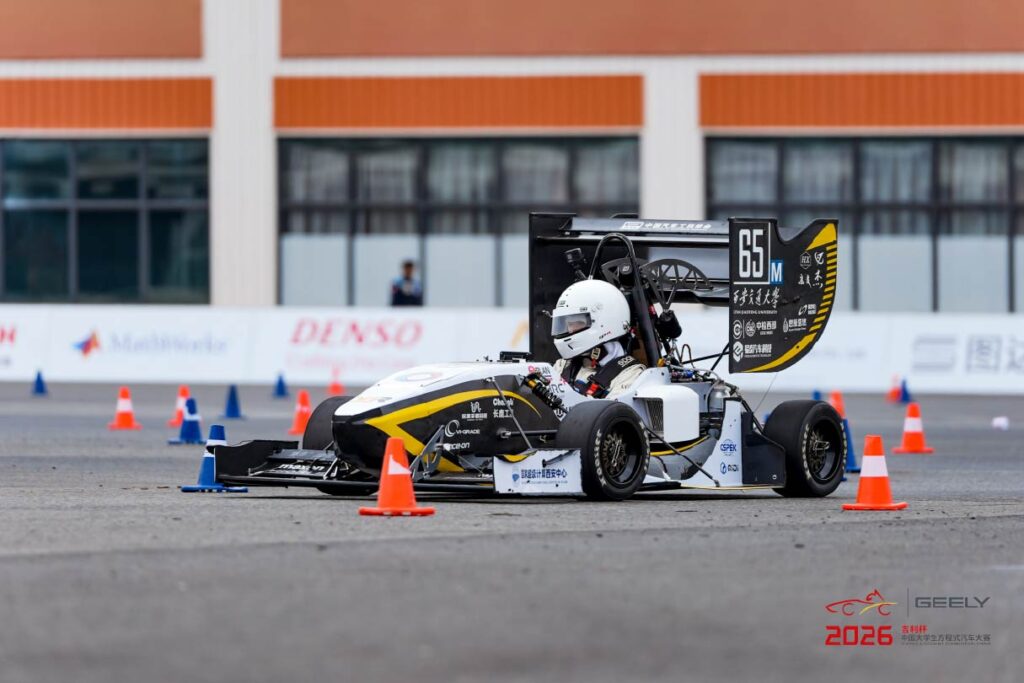
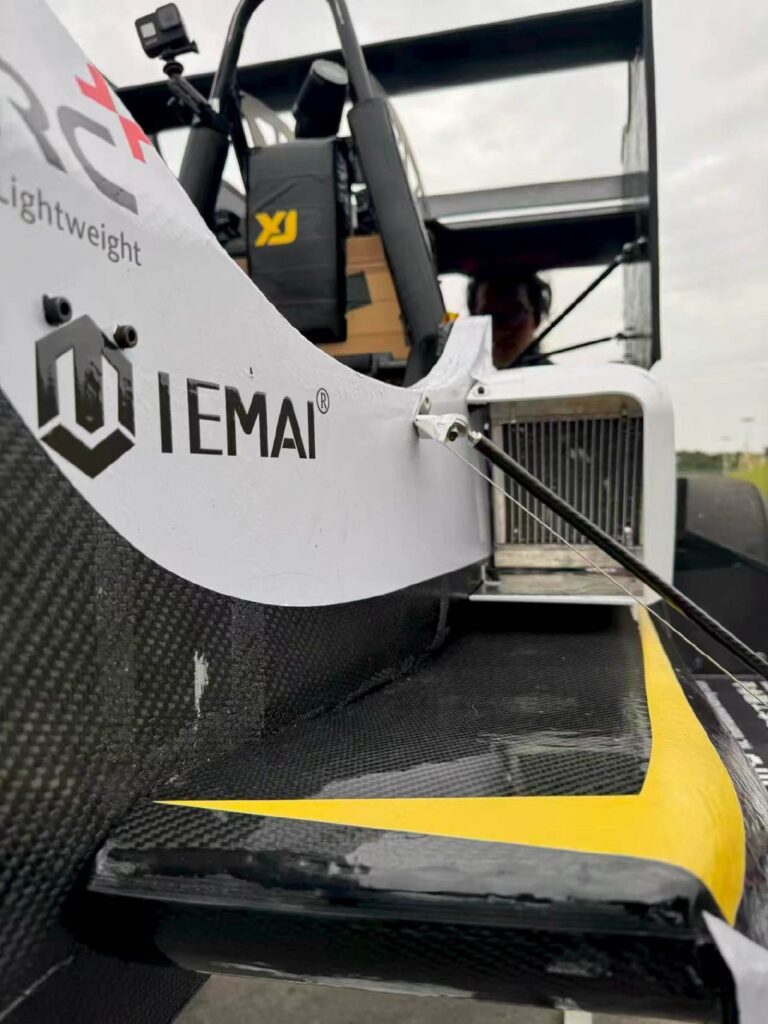
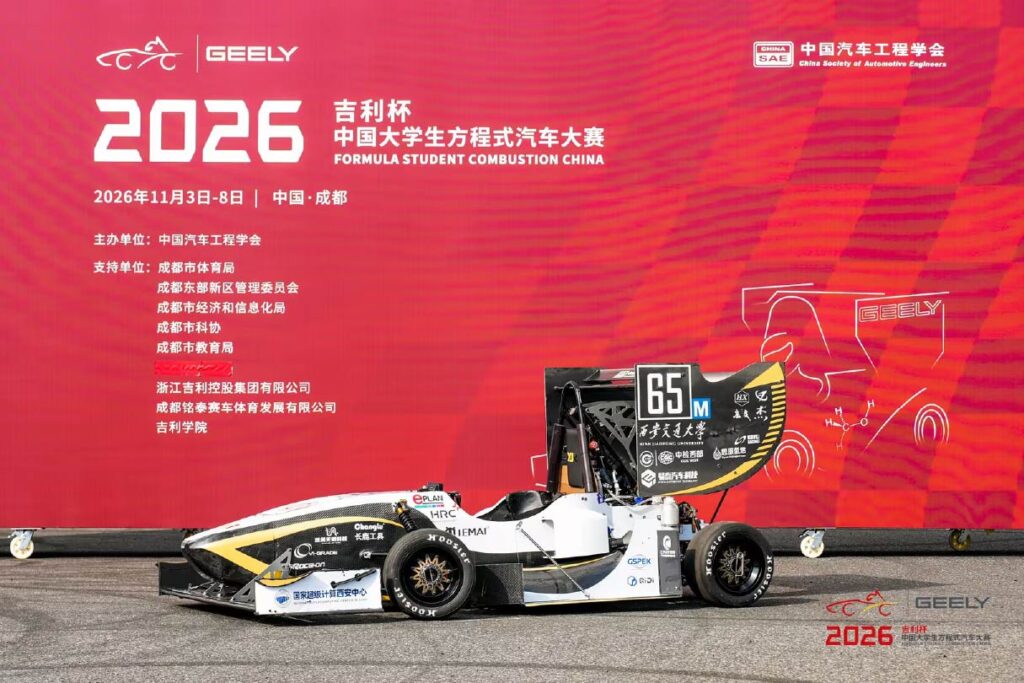
The 2026 Geely Cup Formula Student China (FSCC) wrapped up at the Chengdu Tianfu International Circuit, where Xi’an Jiaotong University’s Yixing Racing Team finished third nationwide in the newly introduced Methanol Class.

The weight of that result goes beyond the placing. The 2026 season is the first time in FSC history that an internal combustion class has run methanol power, and 16 university teams faced the design, manufacturing and calibration challenges of methanol fuel under real track conditions. The Methanol Class was a track nobody had run before. As a sponsor, IEMAI 3D helped build the methanol car’s powertrain with industrial-grade FDM additive manufacturing. From intake manifold to other functional parts, 3D printing ran alongside the team’s season-long iteration cycle.

  • First Year of the Methanol Class

We have already published a detailed breakdown of the CF-PPS intake manifold printed for the Yixing team: carbon fibre reinforced PPS, the large-format YM-NT-1200 printer, and how a thin-wall structure with integrated internal ribs cut more than 30% of the weight from an aluminium manifold. 

But a methanol race car is never made competitive by its intake manifold alone.

Methanol’s high octane rating, knock resistance and high latent heat of vaporisation suit the high-rpm, high-load extremes of racing, yet they place tougher demands on the intake system and on the thermal management and structural reliability of every functional part around the engine. As IEMAI 3D moved from printing a part to supporting a team’s multi-part manufacturing needs, the value of 3D printing stopped being a substitute for a conventional process and became part of the team’s development loop: model revised on Friday, part in hand on Monday for installation and testing. Iteration speed itself becomes a competitive advantage.

  • More Than an Intake Manifold

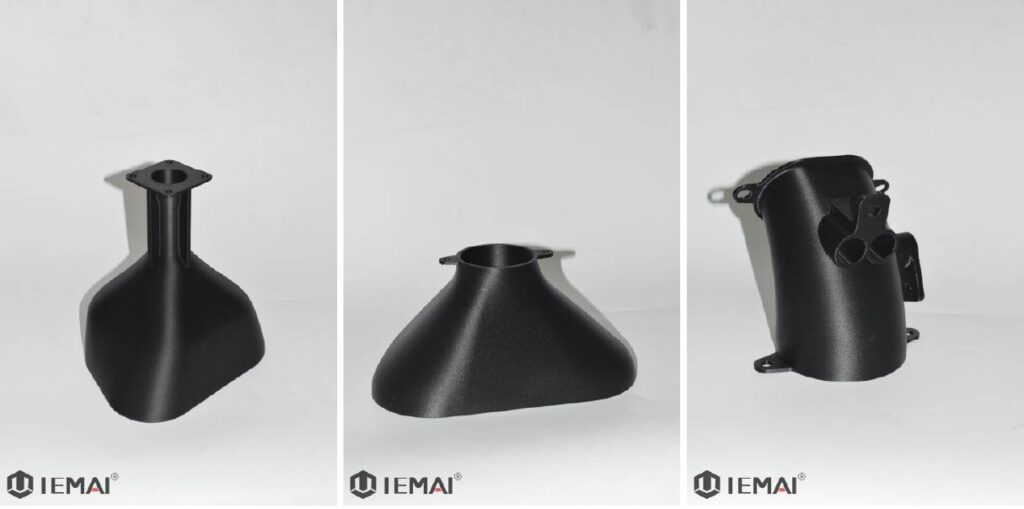
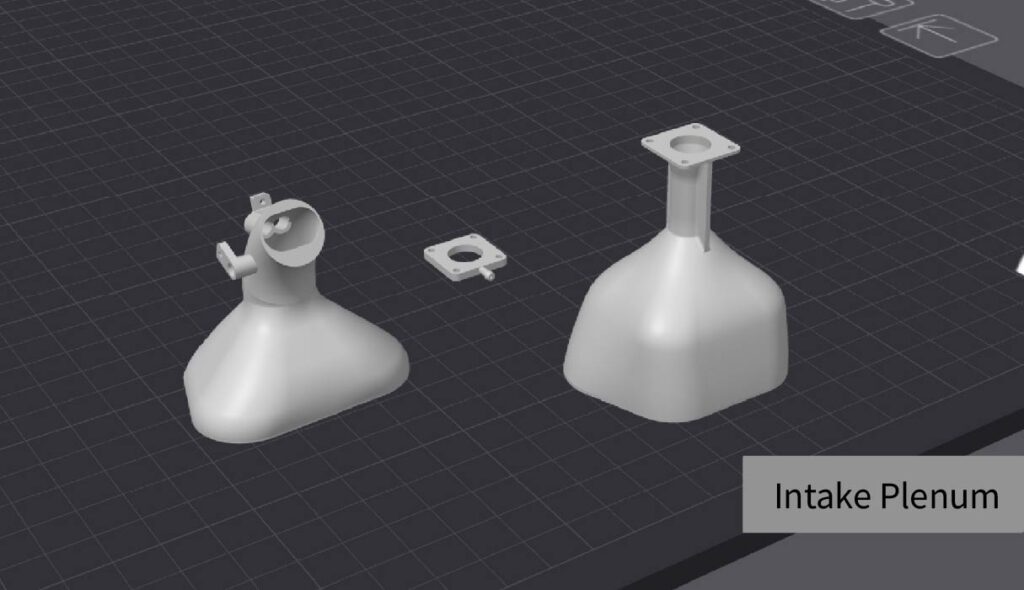
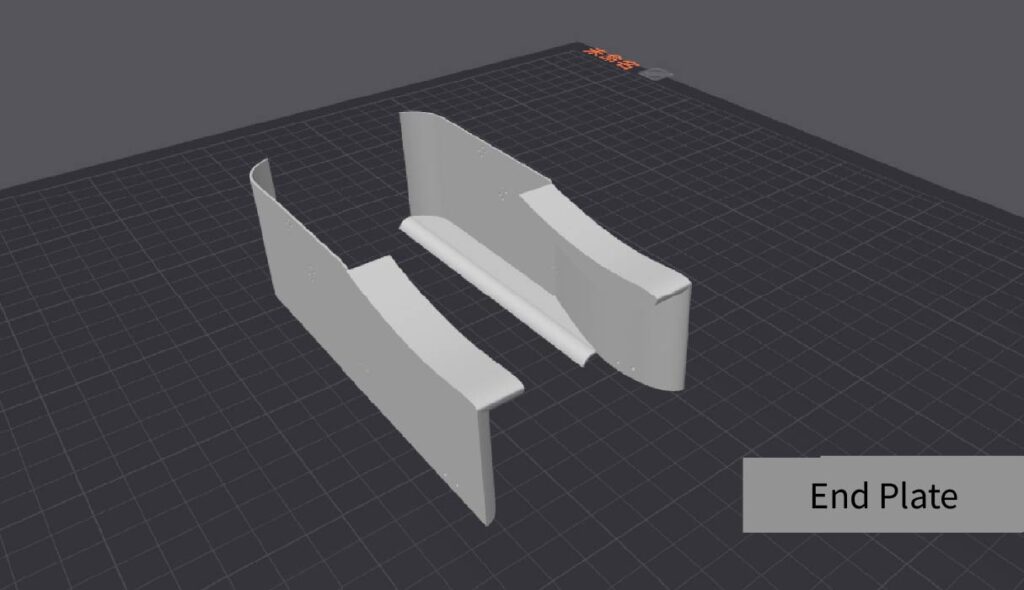
Alongside the manifold, IEMAI 3D printed plenum chambers, endplates, throttle pedal faces and other parts.

The plenum and manifold runners were optimised together for volumetric efficiency, the endplates serve aerodynamic and body-structure requirements, and the pedal face is the most direct interface between driver and powertrain, where shape, stiffness and feel all shape the driving output.

What these parts share is clear. Individual value may not be the highest, but conventional machining is slow, tooling does not pay off, and design changes come often, which is exactly where industrial FDM wins. For non-standard functional parts in batches of ten or fewer, the cost and lead time of one mould set already cover several rounds of direct FDM printing; and if the design logic is overturned mid-season, no tooling is scrapped, only re-sliced.

Low volume, high mix, fast pace: that is daily life for a university racing team, and precisely where industrial additive manufacturing belongs.

  • Why IEMAI 3D

IEMAI 3D is a high-tech company specialised in the R&D and production of industrial 3D printing, with solutions covering aerospace, automotive, medical and electronics manufacturing. In automotive, it has built long experience in composite tooling, lightweight structural parts and functional end-use parts, and its composite mould capability has reached volume production in automotive, yacht and aircraft applications.

In other words, a race car is not IEMAI’s first encounter with automotive. Nor is the value of industrial FDM on track about making plastic parts that merely look the part. CF-PPS offers a continuous service temperature of 200–220°C, short-term peaks above 260°C, water absorption ≤0.05%, dimensional stability under temperature and humidity swings, and UL94 V0 flame retardancy in the material itself. These figures point to real engine-bay conditions, not showroom samples.

Sponsoring the Yixing team puts industrial additive manufacturing into one of the harshest proving grounds available. The track does not relax its standards for heat, vibration and sustained load just because the team is a student team.

The Methanol Class podium recognises the Yixing team’s engineering capability, and it is also a track validation of how IEMAI’s printed parts hold up under extreme conditions. From manifold to plenum, from endplate to pedal face, what each part withstood on track added up to a result that could be timed.

Racing is the most honest proving ground: heat, vibration and continuous high load spare no component. But IEMAI’s next step in automotive goes further than carrying one team through a season of iteration. It is about bringing the material systems, large-format forming capability and fast response validated on track into the more everyday, more scaled work of automotive manufacturing: composite tooling, jigs and fixtures, lightweight structural parts and functional end-use parts.

Scroll to top