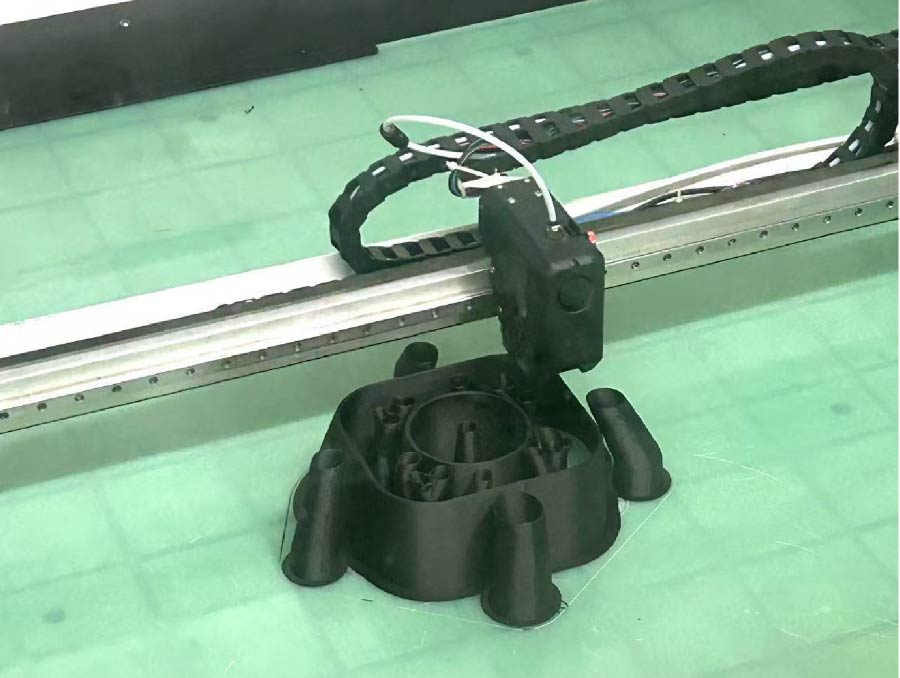
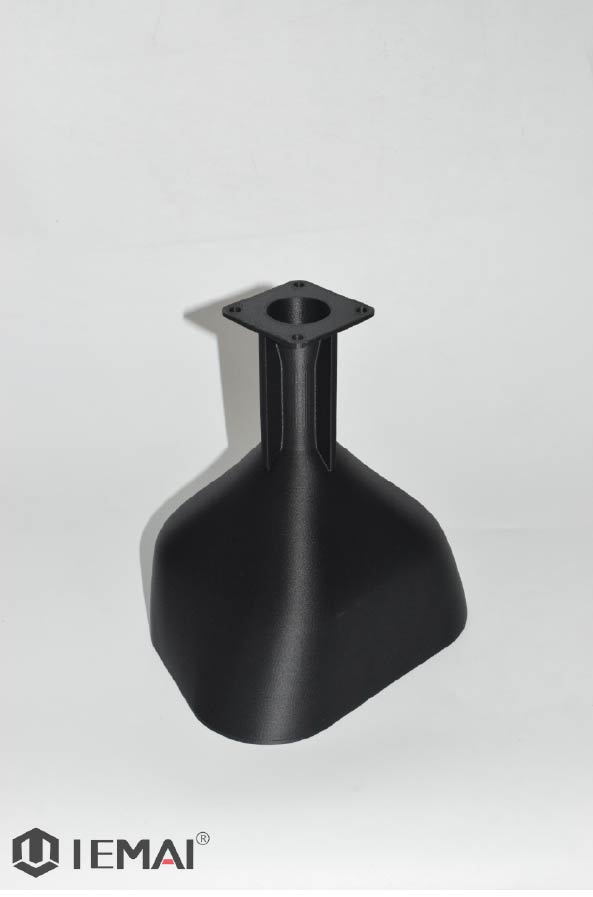
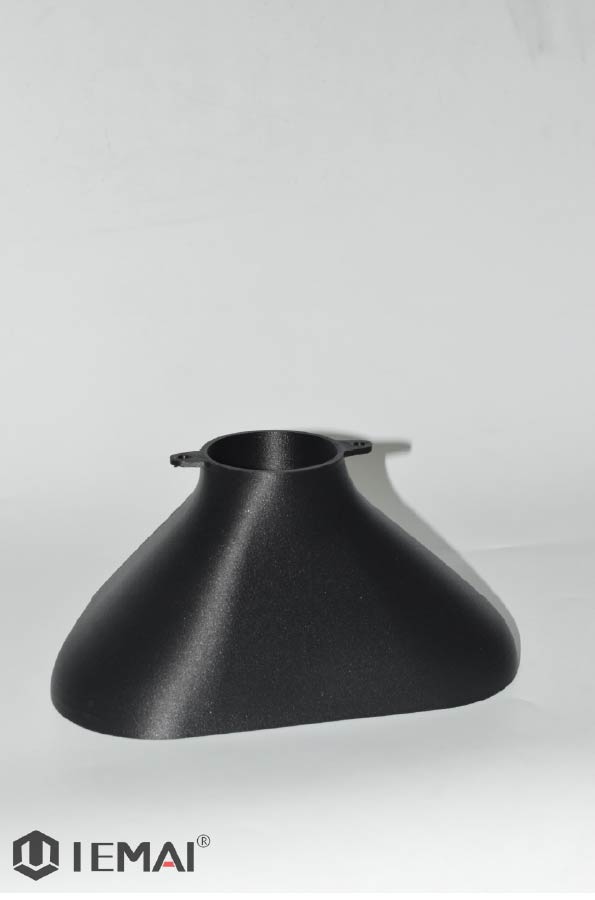
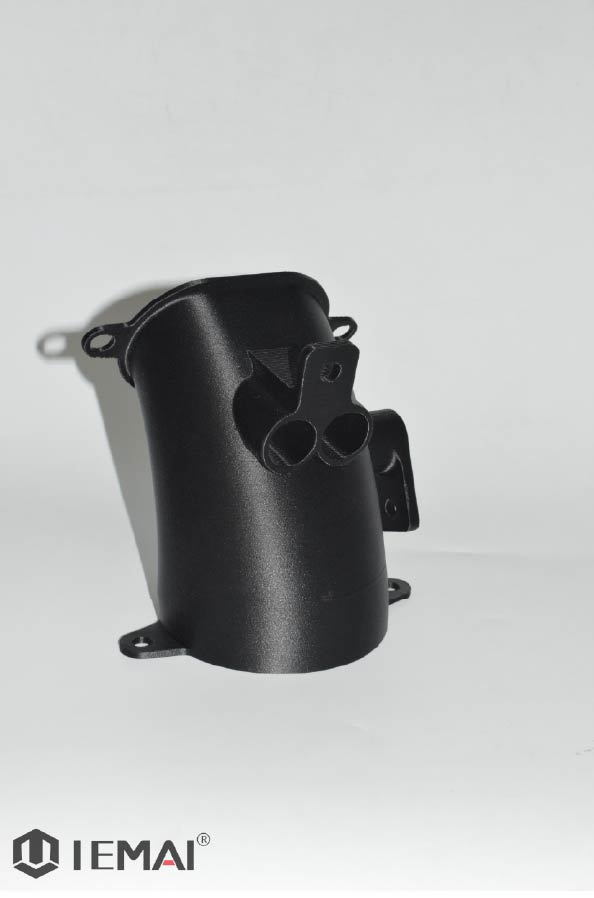
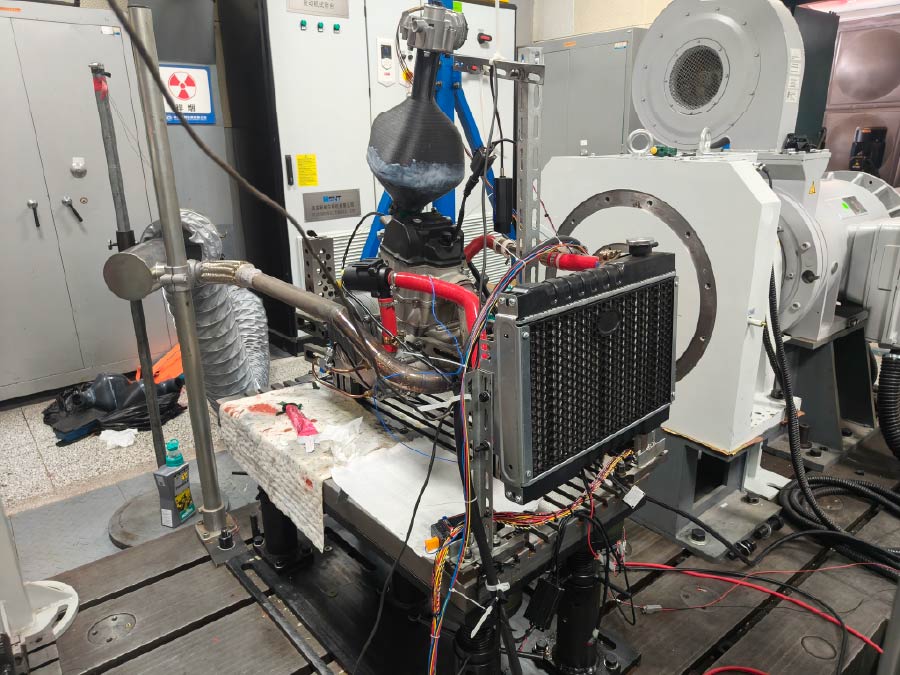
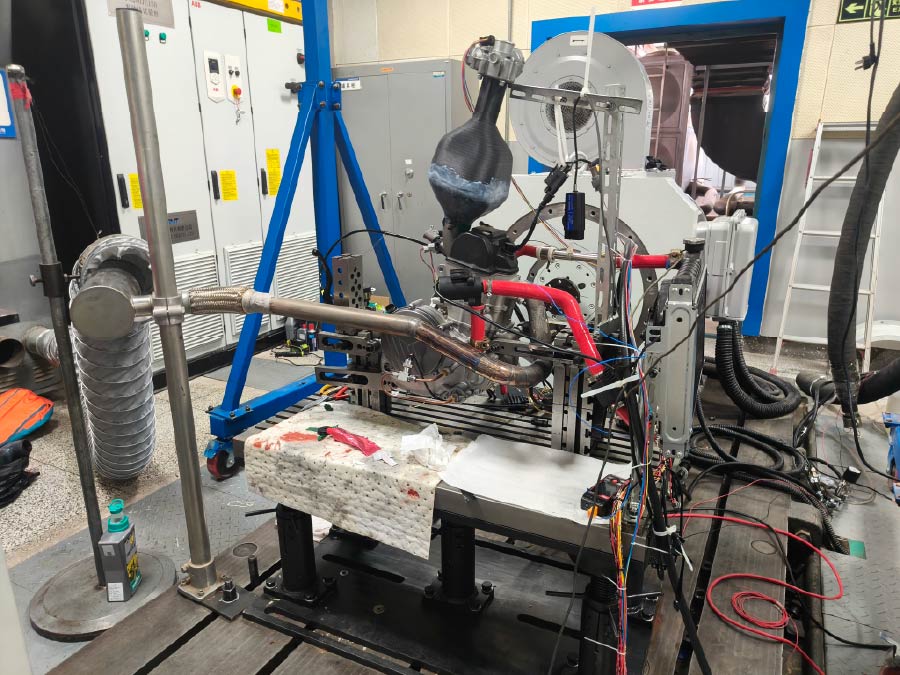
Formula SAE China (FSC) is a top-tier automotive engineering competition for university teams across China. Participating teams refine race car performance to the strictest standards, pursuing the perfect balance of power output, lightweight design and operational reliability. The Yixing Racing Team of Xi’an Jiaotong University adopted industrial-grade FDM 3D printing technology from IEMAI 3D, using carbon fiber-reinforced PPS (CF-PPS) composite material to fabricate a high-performance intake manifold, delivering a powerful driving force for the technological upgrade of race car power systems.

The intake manifold acts as the “air distribution hub” of an engine. It evenly distributes air to each cylinder, generates vacuum signals to assist the ECU in fuel injection control, and optimizes intake runners to boost transient throttle response. Complying with competition regulations, all internal combustion race cars must install a 20 mm restrictor to limit power, with a maximum engine displacement capped at 710 cc. Most participating teams adopt 600 cc motorcycle engines. With fixed displacement, intake efficiency becomes the core breakthrough for power improvement.

Traditional manufacturing methods suffer from high costs, long lead times and severe design limitations, failing to meet the rapid iteration demands of university student teams. Industrial-grade FDM 3D printing from IEMAI 3D overcomes these pain points and delivers three core advantages:

  • Ultra-lightweight Construction

Built with CF-PPS carbon fiber composite, thin-walled structures and internal lattice stiffeners are integrated in one printing process. The finished manifold weighs over 30% less than conventional aluminum counterparts, greatly improving the car’s power-to-weight ratio.

  • Rapid Design Iteration

FDM technology eliminates mold fabrication. Engineers can freely adjust critical parameters including resonator length and branch pipe angles. The full workflow from CAD model to finished component takes only several days, forming an efficient closed loop of “design – printing – testing” and drastically shortening the R&D cycle.

  • Direct Manufacturing of Complex Geometries

3D printing accurately produces intricate runners unachievable via traditional machining, such as variable-length intake tracts and integrated plenum chambers. Components can be printed separately then precisely assembled with dedicated sealing structures, balancing maximum design freedom and strict airtightness requirements. CF-PPS features robust interlayer bonding and high compactness, guaranteeing stable performance under extreme track conditions with high temperature and intense vibration.

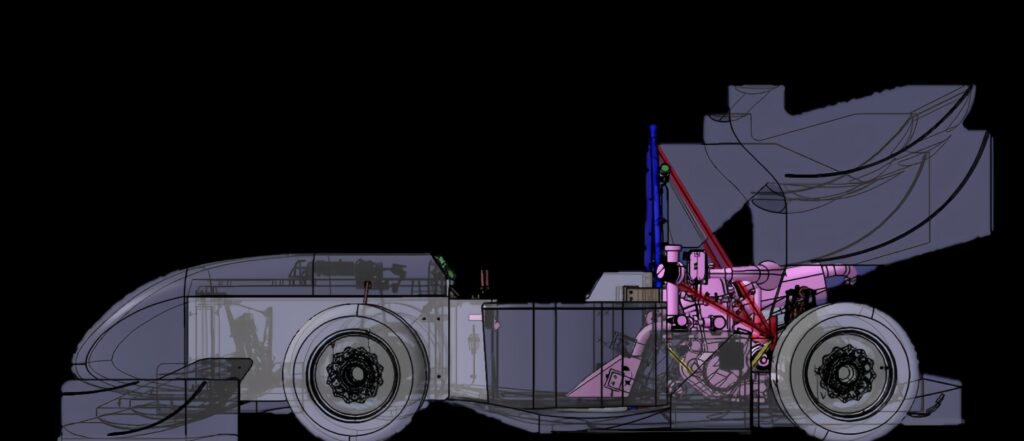
CF-PPS material fully adapts to the harsh high-temperature, high-vibration and corrosive environment inside race car engine bays, with standout properties as below:

  • Superior Heat Resistance: Continuous operating temperature ranges from 200 °C to 220 °C, with short-term peak temperature resistance exceeding 260 °C; heat deflection temperature surpasses 280 °C, resisting persistent high heat inside engine compartments.
  • Exceptional Dimensional Stability: Water absorption ≤0.05%, molding shrinkage between 0.05% and 0.2%. The component maintains its shape without warping under temperature fluctuations or humid conditions, stabilizing precision intake runners for long-term operation.
  • Outstanding Mechanical & Chemical Properties: Ultra-high rigidity, strong creep and fatigue resistance; resistant to gasoline, engine oil, strong acids, alkalis and organic solvents. The material achieves UL94 V-0 flame retardancy at 0.8 mm thickness, self-extinguishing without dripping and releasing low non-toxic smoke.
  • Anti-static & Electromagnetic Shielding Performance: Carbon fiber modification delivers conductive and anti-static properties with excellent electromagnetic shielding, compatible with the complex electronic systems of race cars.

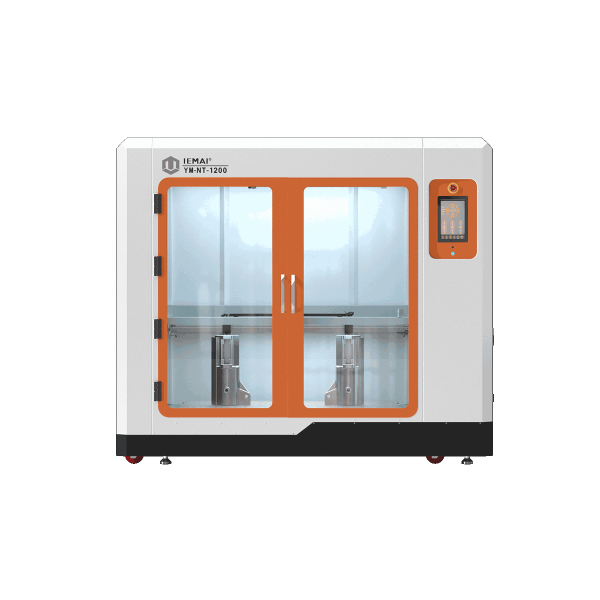
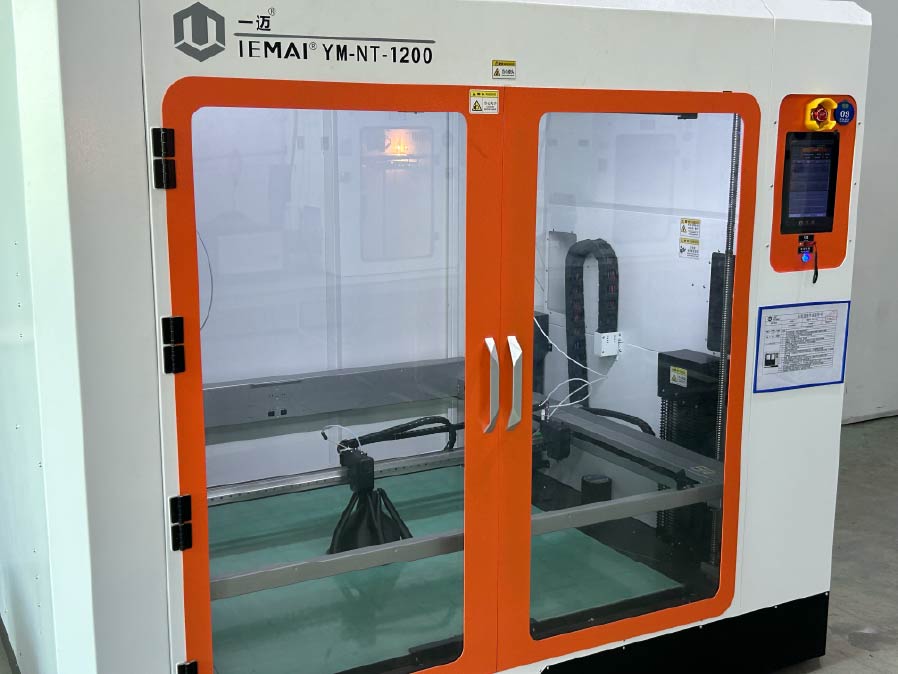
The intake manifold was manufactured on IEMAI 3D Large-Format 3D printer YM-NT-1200. This series is engineered for high-strength and large-size production, compatible with carbon fiber/glass fiber reinforced composites , engineering, and other modified materials.control of layer thickness and support strategies ensures smooth internal runner surfaces to reduce intake resistance, while ultra-flange flatness eliminates secondary machining and delivers reliable sealing for precision race car assembly.

YM-NT-1200

Full R&D Workflow from CAD Model to Race Track

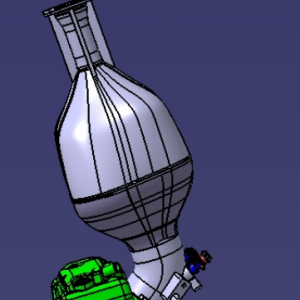
  • The racing team completes 3D modeling and CFD flow optimization of the intake manifold
进气歧管
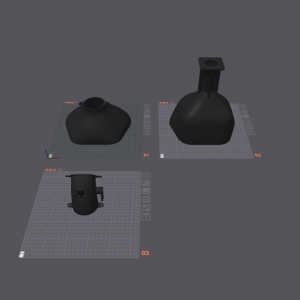
模型
  • IEMAI 3D engineers optimize printing parameters and fabricate manifold components separately with CF-PPS filament
  • Post-processing removes support structures, and finished parts are delivered to the team for precision assembly
  • Bench performance testing and on-track validation

“The 3D printed intake manifold serves as the core functional component of our power system. By optimizing internal geometry to boost air mass flow, it elevates engine power output and transient response. IEMAI’s 3D printing technology enables unrestricted structural design, delivering components with high mechanical strength and outstanding heat resistance. The manifold maintains stable performance during long-duration bench tests and track sessions, significantly improving engine calibration efficiency and the reliability of our entire power system.”

— Yixing Racing Team, Xi’an Jiaotong University

Beyond performance upgrades for race cars, 3D printing serves as a vital enabler for university engineering education. It lowers the technical barrier for student teams to realize complex designs, transforming textbook theories into tangible physical prototypes and cultivating students’ capabilities in engineering design, material application and innovative development through hands-on practice.

Moving forward, IEMAI 3D will continue to advance industrial-grade 3D printing technology and optimize high-performance materials & processing workflows. We will provide customized additive manufacturing solutions for university racing teams and engineering groups, empowering the next generation of engineers to break innovation boundaries and develop more efficient, reliable and lightweight high-performance products.

Scroll to top